You’ve booked your shockwave therapy session. You’re committed to finally defeating this chronic pain. But you’re an active person — a runner, a tennis player, a CrossFitter, someone who doesn’t sit still well. And you need to know: what happens to your workout schedule while you’re being treated?
The good news is that shockwave therapy has a dramatically shorter activity restriction window than most pain treatments. There’s no cast, no brace, no six-week non-weight-bearing period. But there ARE guidelines that protect your healing investment — and ignoring them is one of the few ways patients undermine their results.
The First 48 Hours After Treatment
In the 24–48 hours immediately following a shockwave session, the treated area undergoes an inflammatory response. This is intentional — it’s the mechanism of action. The treatment deliberately re-triggers the acute healing phase that chronic tissue needs to regenerate. During this window:
- Avoid high-impact activity on or involving the treated area. If we treated your heel, don’t go for a long run. If we treated your Achilles, avoid jumping and explosive movements.
- Avoid anti-inflammatory medications (ibuprofen, naproxen, aspirin for pain relief). These blunt the inflammatory response that shockwave is designed to trigger. Use acetaminophen/Tylenol if pain management is needed.
- Avoid ice on the treatment area for the same reason — it reduces the inflammatory signal that drives healing.
- Light walking and daily activities are generally fine, even for lower extremity treatments. Total rest is rarely recommended and may not be beneficial.
Days 3–7: The Return-to-Activity Phase
Most patients feel noticeably different by day 3–5 after their first session. Some feel better (the pain gate effect), some feel about the same, and some feel temporarily worse before improvement begins. All of these are normal patterns.
Starting around day 3, most patients can return to moderate exercise at reduced intensity. For runners, this might mean 50% of your usual mileage at an easy pace. For swimmers, pool work is typically fine from day 2 onward. For gym work, upper body exercises are generally okay even the day after a lower extremity treatment.
Serving North Miami, Aventura, Miami Shores, Biscayne Park and the surrounding area. Call (786) 981-5812 or fill out the form below.
Sports-Specific Guidance for North Miami Athletes
Tennis and Racquet Sports: If we’re treating lateral epicondylitis (tennis elbow) or shoulder tendinopathy, avoid heavy racquet use for 48 hours. Light hitting on days 3–5 is typically acceptable. Competitive play can usually resume by the second week if symptoms allow.
Running: For plantar fasciitis or Achilles treatments, avoid long runs for 48–72 hours. Begin with short easy runs (20–30 minutes) from day 3 onward if pain during running has improved. We provide a progressive return-to-run protocol with specific mileage guidance.
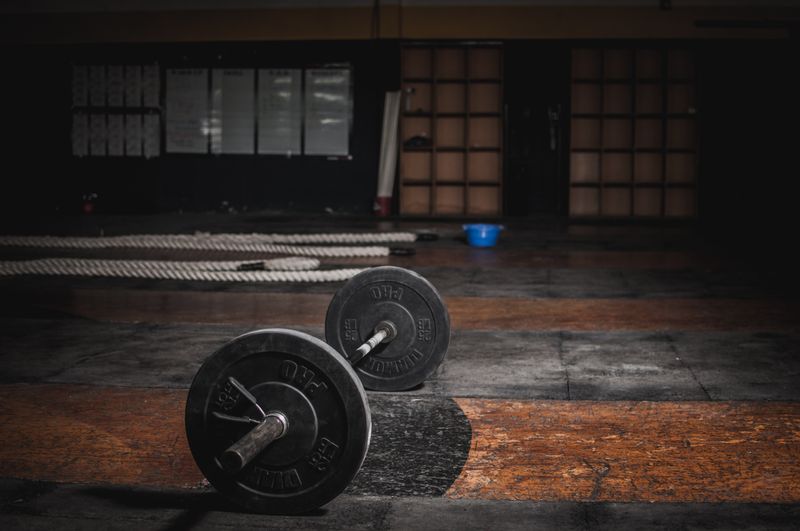
CrossFit / High-Intensity Training: Modify your workouts to avoid loading the treated area for 48 hours. If your knee is being treated, box jumps and heavy squats should wait. If your shoulder is the target, keep upper body overhead work light initially.
Swimming: Almost always fine after 24–48 hours. Water resistance without impact makes swimming one of the best recovery activities during a shockwave protocol.
Cycling: Generally well tolerated even for lower extremity treatments, as it’s low-impact. Spin classes and road cycling are typically fine by day 2–3.
The Counter-Intuitive Rule: Don’t Over-Rest
Here’s what surprises most patients: total rest is not the goal. The tissue needs mechanical loading to properly organize the new collagen that shockwave stimulates. Complete immobility can actually reduce the quality of healing. The goal is appropriate loading — enough to provide the mechanical stimulus for collagen maturation, but not so much that you’re re-damaging tissue that’s in the middle of repairing.
This is why we provide specific, personalized return-to-activity guidance at Peak Performance rather than a one-size-fits-all restriction list. Your activity profile, your condition, and your treatment response all inform what’s right for you.
Between Sessions
Between weekly shockwave sessions, most patients can maintain close to their normal activity level, with modifications based on how the treated area feels. If you’re a recreational tennis player in North Miami, you don’t need to quit the game for six weeks. You may need to skip one day of play after each session, then resume.
The general rule: if an activity causes sharp, acute pain in the treated area during the first 48 hours, don’t do it. Mild soreness or dull aching is acceptable and expected. Sharp or worsening pain is the signal to back off and contact us.
Peak Performance Shockwave Therapy serves athletes and active adults throughout North Miami, Aventura, Miami Shores, Biscayne Park, and the surrounding 10-mile area. We understand that your activity level is part of your identity — and our goal is to get you back to full participation as quickly and safely as possible.
Ready to Stop Living in Pain?
Patients near North Miami, Aventura, Miami Shores & Biscayne Park see results in as few as 3 sessions.
Or call us: (786) 981-5812





Leave A Comment